
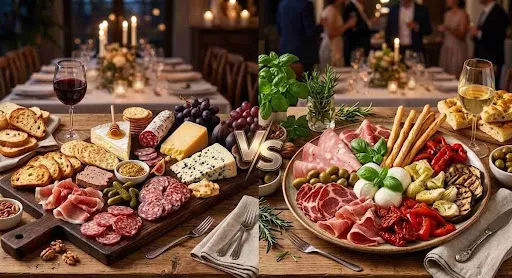
Planning a weekend get together often comes with the goal of impressing guests. There is this common issue that pops up about appetizers. Some people lean toward a French meat board while others go for Italian ones instead. These terms get tossed around like they mean the same thing all the time. They actually have pretty different purposes though in how they work for a party.
Understanding the real difference between charcuterie and antipasto makes planning your next party way easier. It seems obvious after you get it, but before that it can be confusing for some people. So, let's talk about why these two platter styles keep showing up everywhere, and how you can choose the right one,
Let's start with the French classic. The word on its own translates to "cooked flesh" in French. And like, a proper charcuterie board is an unapologetic little celebration of preserved meats.
Think of it as a master butcher's showcase. It is not a random assortment of crackers and grapes dumped on a plate. The whole board spins around the craft of cured, smoked, and potted meats. When you go for charcuterie, you get this intense, fatty, and really deeply savory taste, all at once. Every bite carries weight.
A French meat board demands strong accompaniments. You need elements that cut through the rich animal fats and balance the heavy proteins.
While thinking of party appetizer ideas, remember that a classic French spread should feature these:
Italy comes up now. The word antipasto means before the meal. That seems like a big hint for what it is supposed to do in the first place.
An appetizer spread in Italy wakes up your taste buds. It gets you set for the pasta course which can be pretty heavy later on. It feels like the whole point is to prepare things so the main part lands better.
You can imagine a grandmother pulling jars from the pantry along with fresh vegetables from the garden. Maybe that is how it starts in a lot of homes. She arranges them onto a massive wooden platter. It looks like a feast before the feast.
That said, meat plays a supporting role here. The spotlight shines brightly on acidic, fresh ingredients. The vibe is colorful and abundant. It feels like a bountiful harvest rather than a heavy meat market.
If you want to build an authentic antipasto, you need a vibrant mix. Focus on these classic Italian appetizers:

The difference between charcuterie and antipasto boils down to focus. Charcuterie is heavily meat centric. Antipasto is proudly variety centric.
Both look beautiful but they set different moods for an event. A French meat board comes with browns and deep reds in rustic tones that feel heavy and luxurious. Then an Italian antipasto has bright greens, reds and whites and it feels fresh and lively.
Here is a quick breakdown to help you visualize the comparison.
| Feature | Charcuterie Board | Antipasto Platter |
|---|---|---|
| Origin | France | Italy |
| Primary Focus | Cured, cooked, and preserved meats | A vibrant mix of vegetables, cheeses, and light meats |
| Flavor Profile | Rich, fatty, savory, and deep | Bright, acidic, fresh, and salty |
| Best Wine Pairing | Bold red wines like Cabernet Sauvignon | Crisp white wines like Pinot Grigio |
You know the definitions. Now you need to make a choice. The right board depends entirely on the flow of your event.
Go with charcuterie. Alcohol begs for fat and salt. Your guests will happily graze on rich pate and sharp mustard while sipping bold drinks. A French meat board anchors the stomach perfectly when cocktails take center stage.
Choose the antipasto platter. Nobody really wants to chew heavy meats while sweating out there, in that hot sun. The sharp acidity from marinated artichokes, and the cool fresh melon taste together, feels kind of refreshing. It keeps the party energy high and light.
Again, antipasto wins. You want to stimulate appetites, not ruin them. A heavy meat board will leave your guests too full for the main course. An Italian spread perfectly sets the stage for the feast to come.
Planning the food for an event takes serious energy. You have enough to worry about between cleaning the house and managing the guest list. Sourcing the perfect terrines or finding the best marinated peppers takes time you likely do not have. Building these boards from scratch can easily overwhelm even an experienced host.
Leave the complicated cutting and matching to the experts. You can instantly make your next get together look better, with these lovely, no headache platters that feel effortless, and still really polished. Skip the grocery store lines altogether. Just contact Ace & Olive, as we will sort you out with what your party needs, and deliver a gorgeous centerpiece right to your door.
You absolutely can combine them. Serve a fusion board placing rich cured meats next to bright marinated vegetables. It gives your guests the best of both worlds.
You should serve it at room temperature. Cold temperatures hide the delicate flavors of the cheeses. Room temperature allows the olive oil and marinades to truly shine.
Plan for about two to three ounces of meat per guest. This amount works perfectly if the board serves as a pre-dinner appetizer alongside cheeses and crackers.
Fresh mozzarella is the absolute champion here. Its mild flavor and soft texture perfectly balance the sharp, acidic bite of marinated vegetables and salty olives.
You can slice meats and cheeses up to a day early. However, wait until an hour before serving to arrange the crackers, nuts, and delicate garnishes.